



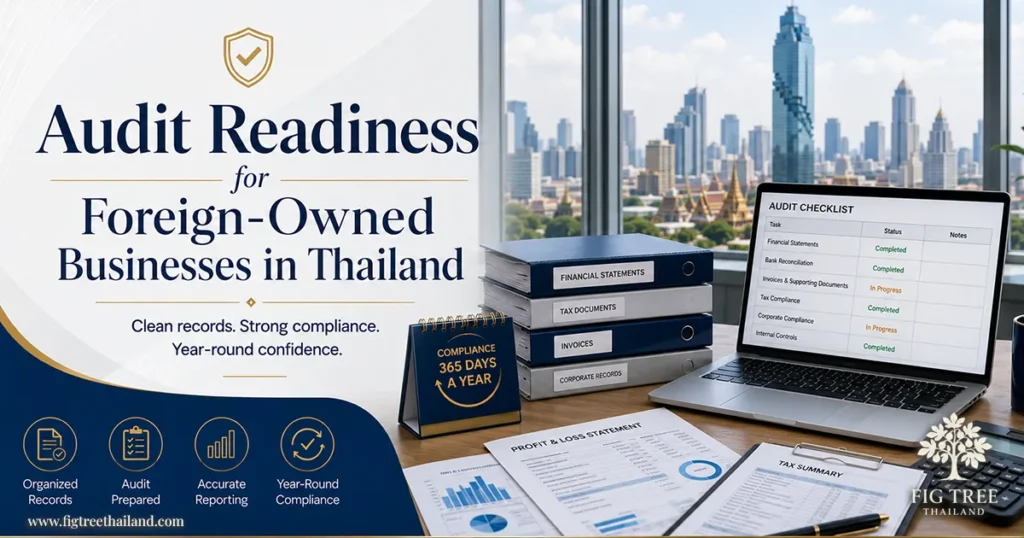
Ensuring your business maintains clean records before an audit should be a routine and predictable administrative process. However, many foreign-owned enterprises operating in Thailand approach year-end financial reporting as a last-minute, high-pressure exercise.
Treating statutory bookkeeping and financial reconciliation as secondary administrative tasks creates significant vulnerabilities within a company’s operational framework. A common misconception among business leaders is that accounting discrepancies can be efficiently corrected just before the fiscal year closes.
In reality, external auditors are engaged solely to verify existing financial records—not to reconstruct missing financial history. Attempting to locate lost tax invoices, reconcile conflicting VAT filings, or trace supporting documentation months after transactions have occurred often leads to reporting delays, compliance issues, and qualified audit opinions.
The Institutional Consequences of Financial Disorganization
Within Thailand’s regulatory environment, financial transparency is directly linked to operational legitimacy. Poor record-keeping can have consequences that extend far beyond routine accounting adjustments.
Revenue Department Scrutiny
Submitting delayed or incomplete financial statements can immediately attract the attention of the Revenue Department. This frequently results in detailed tax audits, retroactive tax assessments, substantial penalties, and accumulating monthly interest charges.
Immigration and Leadership Continuity Risks
For foreign-owned businesses, audited financial statements are more than a fiscal requirement—they are a critical component of regulatory compliance. Unresolved accounting discrepancies, delayed audit reports, or compliance failures can disrupt visa and work permit renewals for foreign directors and key executives, potentially affecting business continuity and corporate governance.
Implementing a Proactive Compliance Framework
True audit readiness cannot be achieved through a year-end rush. It requires a disciplined, month-by-month compliance strategy.
Every business transaction should be accurately categorized and supported by legally compliant documentation in real time. This structured approach minimizes administrative friction, maintains regulatory alignment, and transforms the annual audit from a significant operational risk into a straightforward administrative process.
Strategic Compliance Solutions with Fig Tree Thailand
At Fig Tree Thailand, we provide ongoing accounting, tax, and corporate compliance services specifically designed for foreign-owned businesses operating in Thailand.
By maintaining your financial records to the highest statutory standards throughout the fiscal year, we help ensure your organization remains compliant, resilient, and audit-ready at all times.
Protect your business from unnecessary regulatory risk and ensure your accounts can withstand regulatory scrutiny without disrupting daily operations.
Contact Fig Tree Thailand today to establish a secure, continuous compliance framework for your business.