



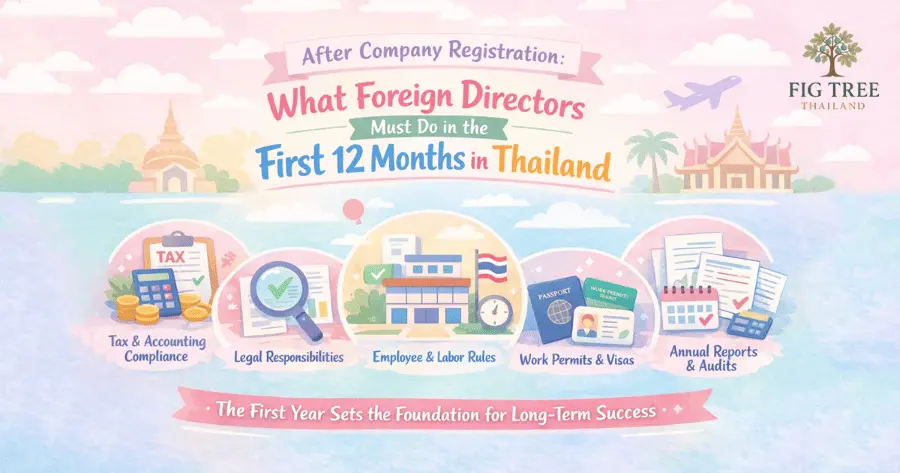
Thai company compliance starts from day one. Registering a company in Thailand is only the beginning.
Many foreign directors believe that once the company certificate is issued, operations can proceed smoothly with minimal administrative concern.
In practice, the first 12 months are the most important period for establishing compliance, financial clarity, and long term stability.
This phase determines whether the company is built on a solid foundation or exposed to avoidable risk.
Why Thai Company Compliance Matters in the First 12 Months
For foreign owned companies, Thai company compliance in the first year sets the foundation for:
• Tax positioning
• Accounting structure
• Employment compliance
• Director responsibility
• Regulatory credibility
Mistakes made early tend to compound.
Correcting them later is significantly more costly and time consuming.
1. Register for the Correct Tax Obligations
Company registration does not automatically complete tax compliance.
Underestimating Thai company compliance in the early months is one of the fastest ways to create avoidable penalties and future clean-up work.
Within the first months, directors must assess:
• Whether VAT registration is required
• Corporate income tax filing obligations
• Withholding tax responsibilities
• Social security registration for employees
Incorrect timing or misunderstanding of thresholds can trigger penalties even if revenue is still modest.
Early review is critical.
2. Establish Proper Accounting From Day One
Accounting should not begin only when revenue grows.
Foreign directors should ensure:
• Monthly bookkeeping is accurate and structured
• Financial statements reflect real tax exposure
• Supporting documentation is properly maintained
• Cash flow visibility is clear
Weak accounting in the first year often leads to reconstruction work later, especially during audits or investor due diligence.
3. Understand Director Legal Responsibility
In Thailand, directors carry legal responsibility for:
• Signing financial statements
• Accuracy of tax filings
• Regulatory submissions
Even if an external accountant handles filings, directors remain accountable.
Understanding this responsibility early prevents personal exposure.
4. Review Employment and Labor Compliance
If the company hires staff, directors must ensure:
• Employment contracts align with Thai labor law
• Work rules are prepared when required
• Social security contributions are properly filed
• Payroll tax obligations are accurate
Labor compliance mistakes often surface during disputes, not at hiring.
Proactive structuring avoids reputational and financial damage.
5. Monitor Immigration and Work Permit Conditions
For companies employing foreign directors or executives, compliance includes:
• Proper visa category
• Work permit alignment with business activities
• Consistency between company objectives and actual operations
Misalignment between corporate documents and immigration records can create complications later.
6. Prepare for Annual Financial Statements and Audit
Most Thai limited companies must:
• Prepare annual financial statements
• Undergo statutory audit
• File with relevant authorities within deadlines
Waiting until year end to organize records increases risk and stress.
Preparation should begin from month one.
Common First Year Mistakes Foreign Directors Make
• Treating accounting as a low priority expense
• Relying solely on filing deadlines without risk review
• Delaying VAT registration decisions
• Hiring staff before understanding payroll obligations
• Assuming small size reduces regulatory exposure
Compliance in Thailand is structured.
It does not scale down simply because the business is small.
A simple internal checklist and monthly review cadence keeps Thai company compliance on track even when the business is still small.
A Strategic Approach to Thai Company Compliance
The first 12 months should focus on:
• Building compliant systems
• Clarifying tax position
• Ensuring documentation accuracy
• Reducing future exposure
This is not about bureaucracy.
It is about operational stability.
Final Perspective
Registering a company is an administrative milestone.
The first year of compliance determines whether the company is sustainable.
For foreign directors, the key question is not
“Is the company registered?”
The better question is
“Is the company properly structured for its first year of operations?”
In Thailand, structure creates stability.